Showing posts with label Nevada. Show all posts

Sunday, May 2, 2010

Cathedral Gorge State Park, Nevada

11 cathedrals and campground


Cathedral Gorge State Park is located about 200 miles north of Las Vegas near Pioche, NV. This small park is noted for it's fantastically shaped rocks and caves. The rocks, similar in look to the badlands of South Dakota, do remind one of cathedrals.
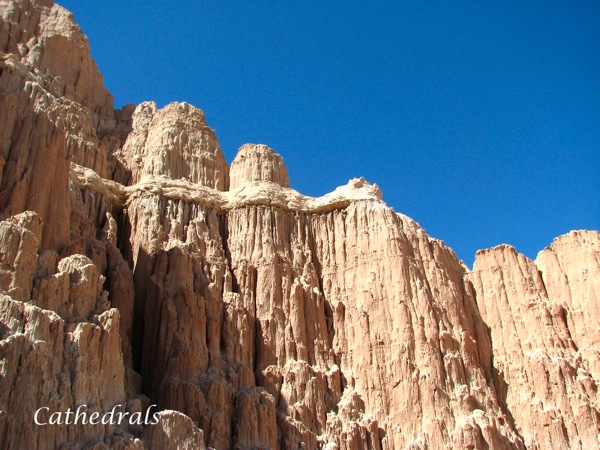
01 cathedrals
03 weathered textures

The texture of the rock varies from smooth to very roughly eroded and weathered. Some of the rock was as hard as, well, rock, and some was soft and crumbly, almost the consistency of dried mud. As you can see here, and in the following picture, the erosion, caused by water in this case, sometimes comes from within the rock creating hollows, caves, and narrow canyons.
 
02 Layers and depths
The only wildlife we saw was Jack Rabbits, which are actually Hares.05 Jack Rabbit
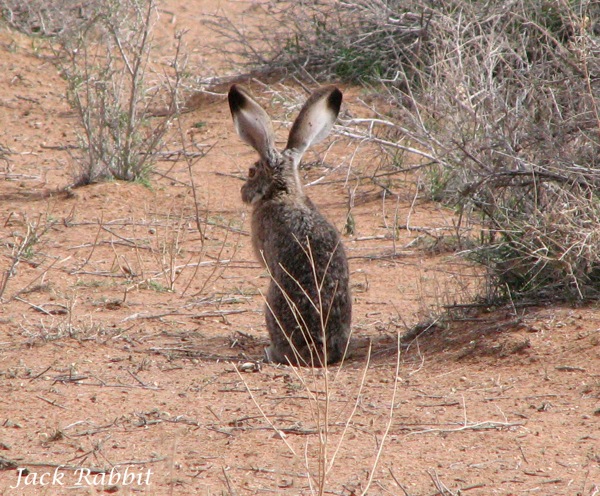


08 a Hare reallyI have no idea what the difference is between a rabbit and a hare, If anyone knows, post me a comment and I'll share it with everyone in the next letter.

We only stayed here one night, but were impressed by the place and spent about 5 or 6 hours hiking and exploring the various features of the park.

09 old water tower
We took a hike starting at this old water tower built in the 1930s by the CCC (Civilian Conservation Corp). The CCC was a program to put young men to work during the depression while improving the facilities at national, regional, and state parks. The CCC parks are all around the country and you can usually tell when you are in a CCC built park by the quality of the workmanship and the well thought out layout of the campgrounds and trails.

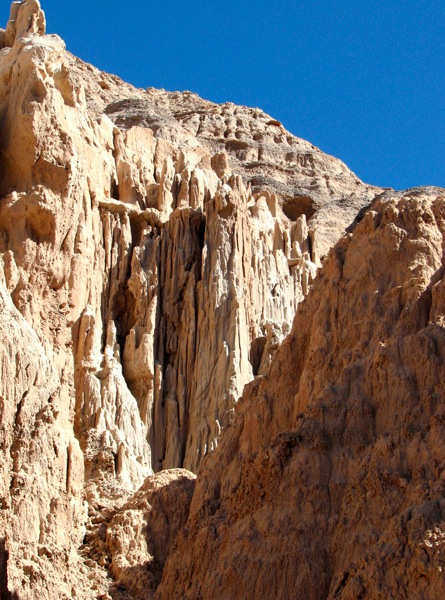
04 eroded spires
Note the debris paths below these spires. In this picture the debris is chips and pieces of rock probably due to freeze cycle weathering. In others you will see sand or mud trails from wind or water erosion. Nature never seems to want to stop tearing down what it has built up.


06 Inside the caves
The caves were sometimes 100 to 150 feet deep, 80 to 100 feet high, and barely wide enough to squeeze through. They were like miniature slot canyons. We often had to leave our packs on the trail outside the cave in order to fit.
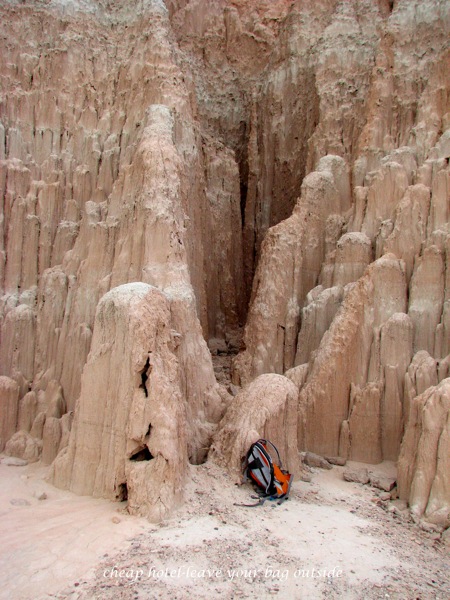
15 cheap hotel leave bag outside 

12 tight fit 


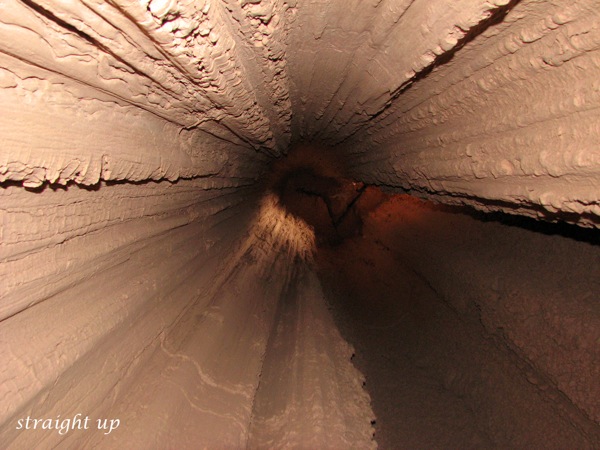
14 straight upSome caves were open to the sky at the top, some like this one were closed off by a thin cap of more erosion resistant rock.

You can see a band of more erosion resistant (harder) rock running through this group below and you can see caprocks of the same material on top of some of the spires. The caps are formed when the softer rock underneath erodes away. Eventually the caps will fall.


19 caves and rugged towers  

16 across the canyon floor
18 canyon cave
17 amazing place

Next we will head SouthEast to the Paria River Area.

Friday, April 30, 2010

The Murals of Ely, Nevada

It's funny how when you're traveling around you sometimes find things you're not looking for. We left Ruby Lake National Wildlife Refuge badly in need of laundry. Checking with Lois, our trusty (mostly) GPS, we found a laundromat, right on Main Street, in Ely Nevada. Who knew? Ely is famous for it's murals. Herewith are a few.
Charcoal oven muralThe Ward Charcoal Ovens. The ovens, built in the 1870s manufactured high grade charcoal for the silver smelters at Ward, just south of Ely.

Pony ExpressCelebrating the Pony Express.

When we left the laundromat we drove south a few miles to a BLM (Bureau of Land Management) elk viewing site. It was nice, free, camping was allowed, and secure, as it was the hiding spot for the local police speed enforcement zone. We woke to an inch of blowing snow and rather than face the pass to our south, we drove back north to Ely to let the day warm and catch some more of the murals. By the way we did view elk, as well as pronghorns, and a badger.

Busty in barroom
Barrooms and casinos seem to be the major industry of Ely, so this seems appropriate.


Seriously, Ely seems a bit depressed like much of the nation we have seen, but it looks like it could be a fun town to visit. The town is a typical Main Street western town, surrounded by gorgeous mountains, still snow capped here in early May.
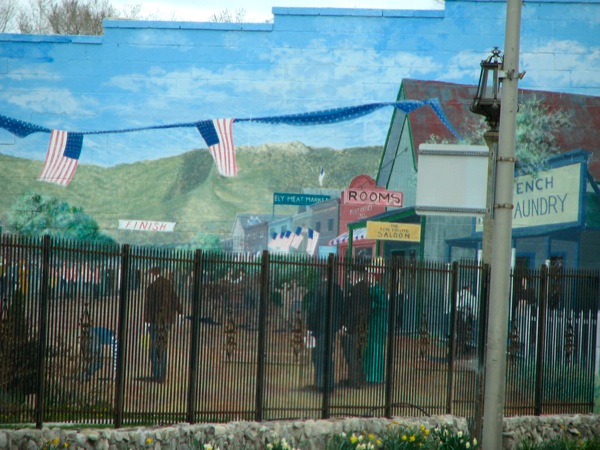
Through the fenceLooking at this picture later in the day, after braving the pass, we couldn't tell if the fence was in front of the mural or part of the mural. We'll have to check next time through.


Sneaking a peak at the headlines


I decided to sneak a peak at the headlines while we were in town. Unfortunately, they were for 1934. Mostly about politics and the bad economy...stuff like that.


Other end of locomotive mural
Click on the picture for a larger view.
Locomotive
Click on the picture for a larger view.
This mural seems to celebrate the various modes of transportation that passed through Ely in the old days, showing the wagon trains, the horse drawn stages, the cattle drives and finally the arrival of the locomotive which certainly did much to change the west (the mural was so big we had to take it in two pictures).


We will head south now with a stop at Cathedral Gorge State Park.

Wednesday, April 21, 2010

Ruby Marsh National Wildlife Refuge, Nevada


National Wildlife Refuge

This one picture says it all about Ruby Marsh, a place of big mountains, big valleys, and big sky. This wildlife refuge, located in Northern Nevada at the meeting of the Great Basin and the northern mountains, reminds one of what America must have been like a million years ago. After another 28 mile gravel road (this one a little dryer than the road to City of Rocks) we arrived at the Ruby Marsh National Forest Campground.

Camper and canyon from marsh
If you look real closely, right below the opening into the canyon, you will see our camper all alone in the campground. The campground is technically open this time or year, but facilities are limited with no water or bathrooms. Fortunately not a problem for us. The weather as is typical for spring is changeable by the hour and we received the usual gamut.

Storm brewing

Remember that canyon from the picture on page 2? Well we decided that we wanted to hike up to those snowfields. We had no topographic maps of the area, there is no trail, but it was so tempting...so off we went.

Hiking the ravine
Overview
The higher we got, the rougher the trail got, but the better the views got.  How high should we go? Finally we let exhaustion determine the limit.

We didn't make it to the snow fields. We reckon we hiked 5 miles what with dead ends and side trips. Every turn in the canyon gave us a better view of the Refuge, and another corner or two ahead.
Refuge from high in the canyon

Shantytown
The park brochure mentioned supplies being available at “Shantytown” 2 miles down the road so we took the truck down to take a look. Unfortunately “Shanytown” seems to be closed for the season. Good thing we were well stocked.  Note that there is still plenty of snow at the higher elevations, The Ruby Mountains are one of the premier Heli-Skiing operations in the west.

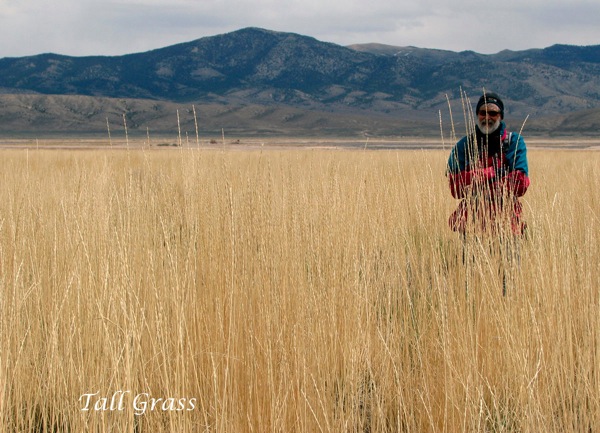
On our last day at Ruby Marsh we took a hike out into the marsh. The marsh contains vast areas of birds, sagebrush, marshy wetlands, and tallgrass prairie.
Tall grass

They run rampant if you don t cage them

There's lots of wildlife in the refuge. We saw mule deer, rabbits, ground squirrels, but didn't see coyotes or bobcats, both of which are present. The birdlife is amazing, but they are very skittish and hard to photograph.
White faced Ibis and friend
Besides these two we saw Kestrels, Redtail Hawks, Northern Harriers, Trumpeter Swans, many types of geese and ducks, and the ubiquitous Vultures.

Next we head to Ely, NV which is famous for, among other things, murals.  Leaving Ruby Marsh via a (you guessed it!) 28 mile gravel road.  Must be a numerology thing.